
Understanding THCa Weed: The Raw Cannabis Revolution

THCa weed is cannabis flower rich in tetrahydrocannabinolic acid, a non-psychoactive compound that converts to intoxicating THC when heated. Here’s what you need to know:
Quick Facts About THCa Weed:
- What it is: Raw cannabis containing high levels of THCa (15-25%), legally classified as hemp if Delta-9 THC is below 0.3%
- Psychoactivity: Non-intoxicating when raw, becomes psychoactive when smoked, vaped, or cooked
- Legal Status: Federally legal as hemp, but state laws vary significantly
- Drug Tests: Will cause you to fail a drug test for cannabis
- Main Use: Heated for psychoactive effects similar to traditional marijuana, or consumed raw for potential therapeutic benefits
The cannabis market is complex, but THCa weed represents a significant shift. The 2018 Farm Bill legalized hemp (cannabis with <0.3% Delta-9 THC), creating a legal pathway for high-THCa flower. While federally compliant in its raw state, this flower provides the same effects as traditional marijuana when heated. A 2022 report confirmed this, finding that most tested hemp samples were functionally marijuana post-heating.
This has created both opportunity and confusion, as the regulatory landscape remains murky. For wholesale buyers seeking bulk THCa flower, understanding the science, legality, and quality is essential for navigating a market where the line between hemp and marijuana is defined by THC measurement.
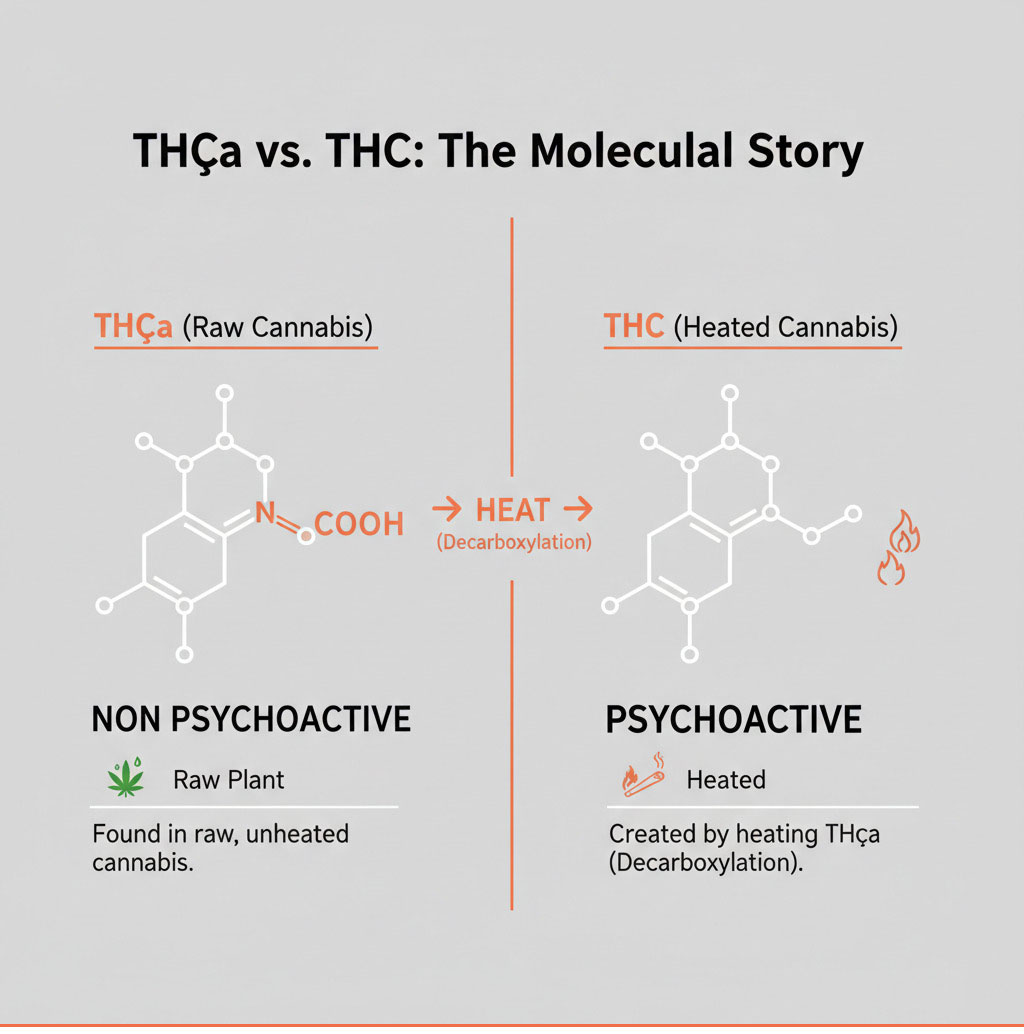
What is THCa? The Non-Psychoactive Precursor in Raw Cannabis
Contrary to popular belief, a living cannabis plant produces very little THC. Instead, it creates THCa—tetrahydrocannabinolic acid—the compound that becomes THC when heated. Think of THCa as THC’s non-psychoactive precursor, abundant in the sticky, crystal-like trichomes of raw cannabis buds.
The plant’s journey begins with CBGA (cannabigerolic acid), the “mother of all cannabinoids.” Through an enzymatic process, CBGA converts into THCa as the plant matures.
The crucial takeaway is that THCa won’t get you high. Its molecular structure includes an extra carboxyl acid group (COOH) that makes it too large to bind with the brain’s CB1 receptors, which are responsible for the euphoric feeling. While you could eat raw cannabis without intoxication, early research suggests THCa has its own unique properties. A scientific review of THCa’s properties points to a range of potential benefits independent of any psychoactive effects.
How THCa Differs from Traditional THC Weed
While they may look identical, THCa weed and traditional THC weed are fundamentally different. Raw THCa weed is non-psychoactive. Traditional THC weed contains active Delta-9 THC that has already undergone some conversion through drying and curing, making it ready to produce psychoactive effects.
A product labeled “20% THCa” indicates its potential psychoactivity. It tells you how much THC the flower could produce if heated. This distinction is vital: for psychoactive effects, you must heat THCa weed. For potential therapeutic benefits without a high, you consume it raw.
The Role of THCa in the Cannabis Plant
In the living plant, THCa serves as a defense mechanism. Concentrated in the trichomes, it helps protect the plant from UV radiation and discourages pests. However, THCa is unstable. Exposure to light, heat, or air will slowly convert it to THC, and eventually to the more sedating CBN (cannabinol). This is why fresh cannabis feels different from older, improperly stored flower and why proper storage is critical to preserving the plant’s intended chemical profile.
The Science of Decarboxylation: How THCa Becomes THC
The change from non-intoxicating THCa to psychoactive THC is a chemical process called decarboxylation, and the catalyst is heat.
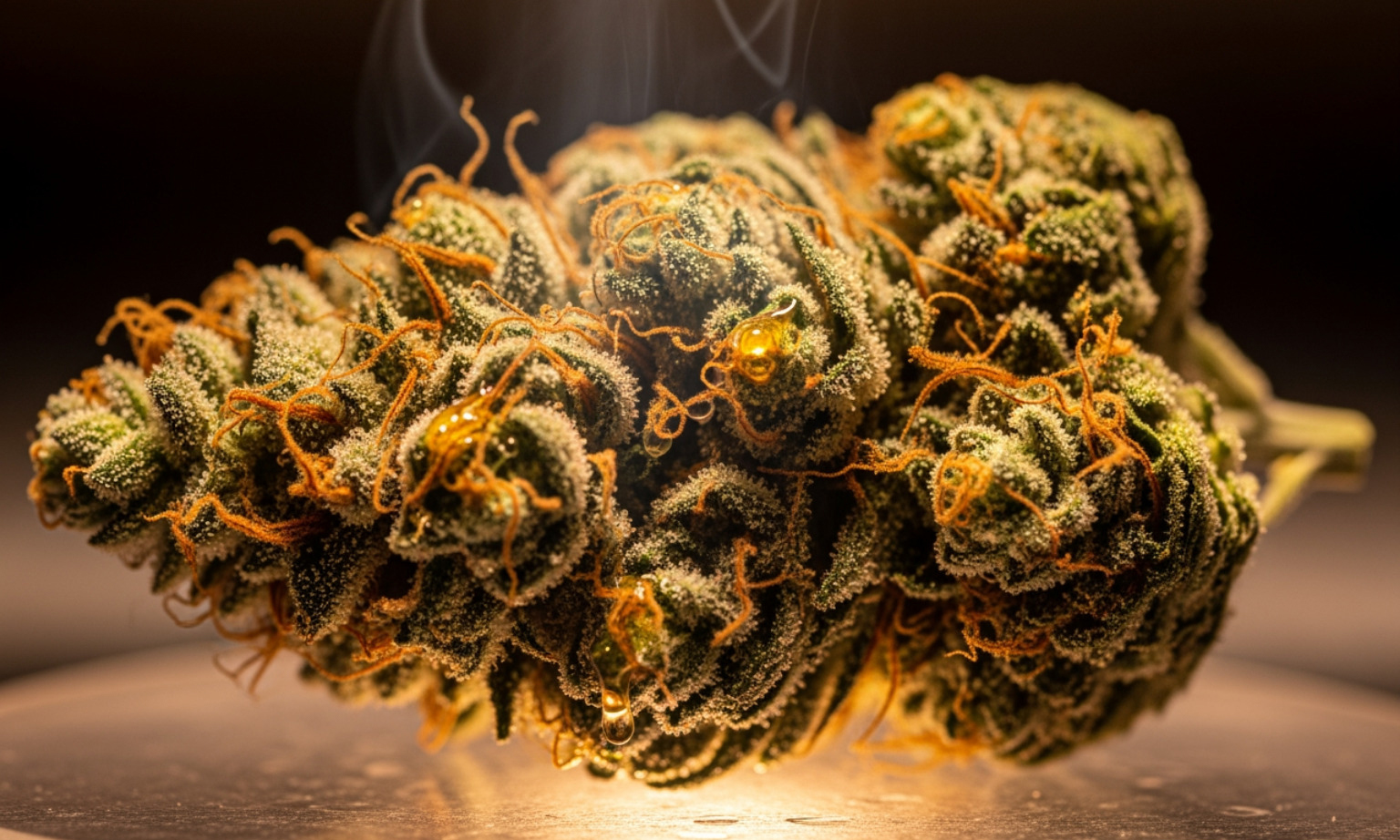
Decarboxylation is the removal of the carboxyl acid group (COOH) from the THCa molecule. This reaction occurs between 200 and 290 degrees Fahrenheit, requiring a balance of temperature and time. Too much heat destroys cannabinoids, while too little results in inefficient conversion.
- Smoking or Vaping: Decarboxylation is nearly instantaneous, as the intense heat from a flame or vaporizer converts THCa to THC upon inhalation.
- Edibles: This method requires a more deliberate approach. Cannabis is typically baked at a lower temperature (200-245°F) for 30-40 minutes to ensure thorough conversion without burning the material.
This versatility allows THCa weed to serve different purposes depending on its preparation.
![TABLE] comparing the properties of THCa vs. THC (Psychoactivity, Legal Status, Molecular Structure, Common Forms, Primary Benefits). – thca weed infographic ](https://images.bannerbear.com/direct/4mGpW3zwpg0ZK0AxQw/requests/000/115/306/315/Nxmo39RaVQ9mo0r4QAOe2Ewg5/3856f8e024851406f2f480bbd25216662396ee05.jpg)
How Decarboxylation Open ups Psychoactive Effects
Once the carboxyl group is removed, the newly formed Delta-9 THC molecule is small enough to bind with the CB1 receptors in the brain and central nervous system. This interaction triggers the cascade of effects associated with a cannabis “high,” including euphoria, altered sensory perception, and relaxation.
Understanding this conversion is critical for legal compliance. The USDA rules on hemp testing require labs to measure total potential THC, not just the naturally present Delta-9 THC. The industry-standard formula is:
Total Active THC = (THCA × 0.877) + Delta-9 THC
The 0.877 multiplier accounts for the weight loss during decarboxylation. This is why a flower with 0.2% Delta-9 THC but 20% THCa is considered highly potent (around 17.5% total potential THC). This calculation is central to the legal and regulatory discussions surrounding THCa weed.
Navigating the Legal Landscape of THCa Weed
The legal status of THCa weed is complex, stemming from the 2018 Farm Bill. This law federally legalized hemp by defining it as any cannabis plant with no more than 0.3% Delta-9 THC on a dry weight basis. The bill made no specific mention of THCa.
This omission created what many call a “legal loophole.” Since raw THCa weed typically has less than 0.3% Delta-9 THC, it technically qualifies as legal hemp, even though heating it produces psychoactive THC levels comparable to marijuana. A 2022 study of 53 hemp samples found that 49 would be classified as marijuana based on their total potential THC after heating.
While the USDA’s rules now require testing for total THC (as detailed in the USDA rules on hemp testing), enforcement varies, creating a gray area between federal and state laws.
Is THCa Weed Legal Where You Live?
Whether THCa weed is legal depends entirely on your state and local laws. The legal landscape is a patchwork of differing regulations:
- Some states follow the federal definition, allowing THCa products.
- Other states have banned or restricted THCa products, closing the loophole.
- The Federal Analogue Act could theoretically be used to prosecute THCa as an analogue of THC, though this is not common.
At Discount Pharms, we ship our premium THCa flower to compliant locations across the United States where permitted by law. We support fast fulfillment from our bases in Crawford, Tennessee and Austin, Texas, and serve customers in states including Alabama, Alaska, Arizona, Arkansas, California, Colorado, Connecticut, Delaware, District of Columbia, Florida, Georgia, Hawaii, Idaho, Illinois, Indiana, Iowa, Kansas, Kentucky, Louisiana, Maine, Maryland, Massachusetts, Michigan, Minnesota, Mississippi, Missouri, Montana, Nebraska, Nevada, New Hampshire, New Jersey, New Mexico, New York, North Carolina, North Dakota, Ohio, Oklahoma, Oregon, Pennsylvania, Rhode Island, South Carolina, South Dakota, Tennessee, Texas, Utah, Vermont, Virginia, Washington, West Virginia, Wisconsin, and Wyoming. Laws are constantly evolving, and availability may change; you must check your local laws before purchasing. We are not lawyers; if you are unsure, consult a local attorney specializing in cannabis law.
Quality, Safety, and the Regulatory Landscape
Inconsistent regulation raises serious concerns about product safety and quality. In unregulated markets, products may have inaccurate potency labels or be contaminated with pesticides, heavy metals, or solvents.
This is why third-party lab testing is non-negotiable. Reputable producers provide a Certificate of Analysis (COA) for every batch, detailing cannabinoid content and screening for contaminants.
At Discount Pharms, we build our reputation on transparency. Every pound of our cultivator-grown THCa flower undergoes rigorous third-party lab testing to exceed compliance standards. When sourcing bulk THCa flower, demand COAs and verify the lab’s credentials. Your customers’ trust depends on it.
Potential Benefits, Risks, and Long-Term Effects
While many use THCa weed for its psychoactive potential after heating, the raw compound itself shows therapeutic promise. Consuming unheated THCa—in a smoothie or juice, for example—interacts with the body differently than THC.

Though research is early, studies suggest THCa may offer several benefits:
- Anti-inflammatory Properties: May help with conditions like arthritis and inflammatory bowel diseases.
- Neuroprotective Potential: Research, including THCA’s neuroprotective activity in studies, indicates it might help protect against neurodegenerative diseases like Parkinson’s and Alzheimer’s.
- Antiemetic Effects: May reduce nausea and stimulate appetite, which is valuable for patients undergoing chemotherapy.
- Other Benefits: THCa also possesses antioxidant qualities and may help reduce seizures and muscle spasms.
However, it’s crucial to understand the risks. When you heat THCa weed, it converts to psychoactive THC, leading to impaired coordination and judgment. Never operate machinery or drive after consuming heated THCa products.
There is also a potential for addiction. While raw THCa is not habit-forming, regular consumption of heated THCa (as THC) can lead to marijuana use disorder, a psychological dependence. If you struggle with cannabis use, help is available. You can find general information on substance abuse and professional support.
Regarding long-term effects, most research has focused on THC, not high-THCa consumption. More studies are needed to fully understand the consequences of regular use. If you have underlying health conditions, consult a healthcare professional before using THCa products.
A Consumer’s Guide to THCa Flower
Whether you’re a business stocking shelves or a curious consumer, understanding how to use THCa weed is key. The consumption method completely dictates the experience.
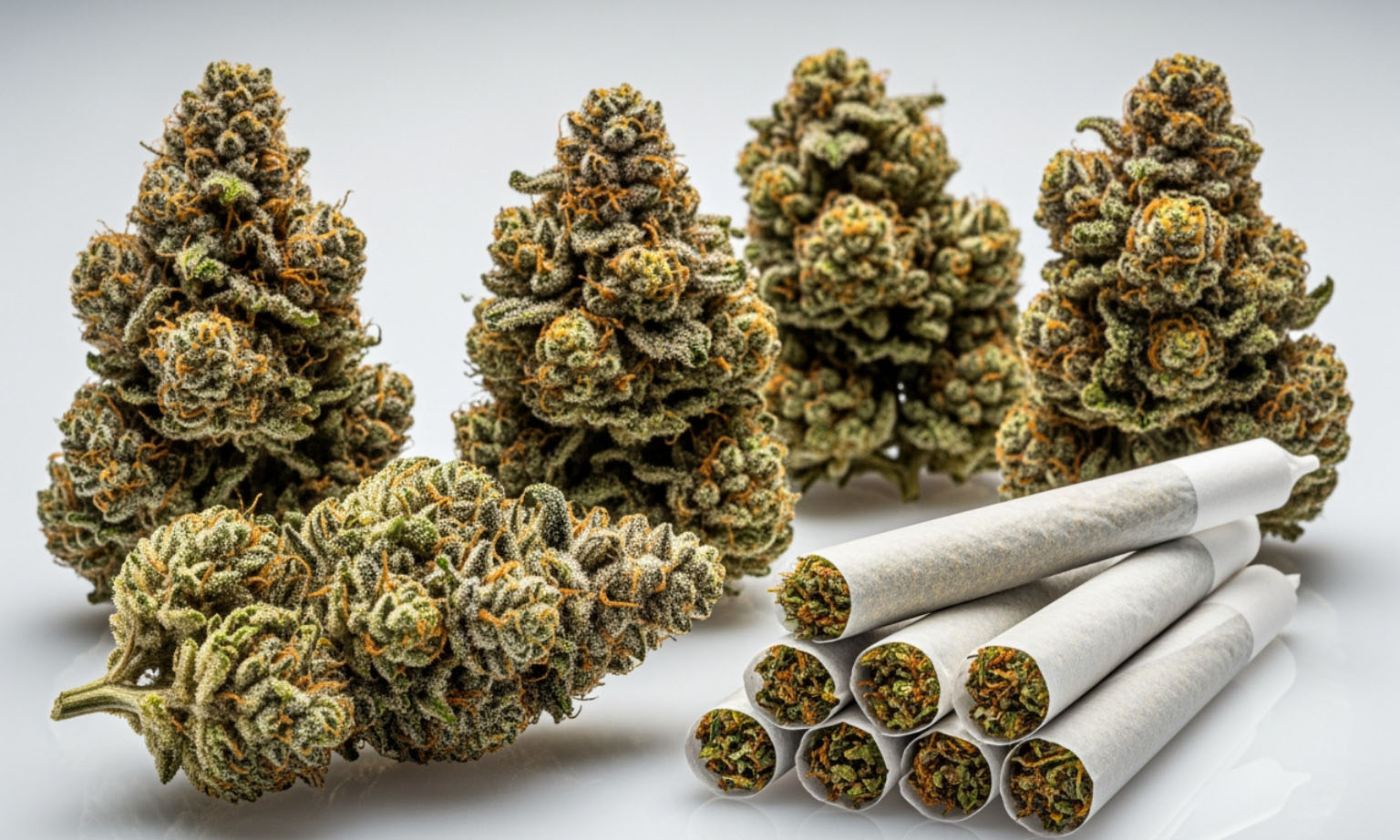
- For Non-Psychoactive Benefits: Consume it raw. Juicing raw cannabis leaves, blending flower into smoothies, or sprinkling it on food keeps the THCa intact, allowing you to access its potential therapeutic properties without a high.
- For Psychoactive Effects: Apply heat. Smoking, vaping, or dabbing rapidly decarboxylates THCa into THC for immediate effects. For edibles, the flower must first be decarboxylated in an oven before being cooked into food for a longer-lasting experience.
Different Forms of THCa Flower Products
THCa weed is available in several forms:
- THCa Flower (Whole Buds & Pre-rolls): This is the most common form, offering the versatility to be consumed raw or heated. At Discount Pharms, we specialize in cultivator-grown THCa flower pounds for wholesale, ensuring businesses have reliable access to premium, lab-tested products.
- THCa Concentrates: Products like THCa diamonds and live resin are highly potent and intended for dabbing or vaping to achieve strong psychoactive effects.
- THCa Tinctures and Topicals: These are formulated to keep THCa in its raw, acidic state for non-psychoactive applications, such as sublingual use or localized skin relief.
Always demand a Certificate of Analysis (COA) to verify the potency and purity of any product.
Popular Strains of THCa Flower
Like traditional cannabis, THCa weed comes in many strains, each with a unique cannabinoid and terpene profile that creates the “entourage effect.” You’ll find indica-dominant strains for relaxation, sativa-dominant strains for energy, and balanced hybrid strains.
Terpenes like myrcene (relaxing) and limonene (uplifting) further influence the experience. Popular high-THCa strains include Pineapple Express, Gorilla Glue, Wedding Cake, Hippie Crippler, Deathstar, and Blue Dream. Exploring different strains allows you to find the specific effects and flavors that best suit your needs.
Frequently Asked Questions about THCa
Let’s clarify some of the most common questions about THCa weed.
How does THCa weed show up on a drug test?
To be clear: using THCa weed will likely cause you to fail a drug test.
When you heat THCa weed, it converts to Delta-9 THC. Your body metabolizes this into THC-COOH, the compound that standard drug tests detect. This metabolite can stay in your system for days or weeks.
Even consuming raw THCa can pose a risk. As research on THCA detection in urine and blood shows, some THCa may convert to THC in the body or during storage, potentially triggering a positive test. If you are subject to drug testing, it is safest to avoid all cannabis products, including THCa flower.
Can you develop a tolerance or addiction to THCa?
This depends entirely on how you consume it. In its raw, non-psychoactive form, THCa is not considered to be habit-forming.
However, if you regularly heat THCa weed and consume it as THC, you can develop a THC tolerance, meaning you’ll need more to achieve the same effect. This can also lead to Marijuana Use Disorder, a psychological dependence where use continues despite negative consequences. Withdrawal symptoms like irritability and sleep issues can occur.
If you find it difficult to control your cannabis use, seeking professional help is a sign of strength. You can find a psychiatrist for addiction support or explore other resources.
How powerful is THCa compared to Delta-9 THC?
This question highlights the unique dual nature of THCa weed.
- In its raw state, THCa has zero psychoactive power. It cannot produce a “high” because its molecular structure prevents it from binding to the brain’s CB1 receptors.
- When heated, THCa becomes just as powerful as Delta-9 THC. A flower with 20% THCa will be roughly as potent as a traditional marijuana flower with 20% THC once it is smoked, vaped, or cooked. The THCa percentage on a lab report is the best indicator of its potential psychoactive strength. Your final experience will also depend on the strain, dosage, and your individual tolerance.
Conclusion
We’ve explored the fascinating world of THCa weed, from its molecular science to its complex legal standing. It’s clear that THCa sits at a unique crossroads of science, law, and consumer demand.
At its core, THCa weed is raw cannabis. In this state, it is non-psychoactive and shows early promise for therapeutic applications. With heat, it transforms into the familiar, intoxicating THC. This dual nature is the source of its appeal and its controversy. The 2018 Farm Bill created a legal gray area for high-THCa hemp, making it technically compliant in many areas while offering the same effects as traditional marijuana.
As the regulatory landscape continues to shift, quality and transparency are more important than ever. Consumers and businesses alike need to prioritize suppliers who provide rigorous, third-party lab testing and clear Certificates of Analysis (COAs). Knowing exactly what is in your product is paramount.
For businesses navigating this market, a reliable wholesale partner is crucial. At Discount Pharms, we are committed to providing high-quality, cultivator-grown THCa weed at competitive prices, backed by the express delivery and first-class service you need. We believe that in a market defined by uncertainty, quality should be a constant.
Whether you’re interested in the wellness potential of raw THCa or the activated effects of THC, being an informed consumer is your greatest asset.
Ready to experience the difference that quality makes? Explore our premium THCa flower products and find out why businesses across the country trust Discount Pharms for their wholesale needs.